
Issues Management at scale across Defence Aviation
The observations in this case study are based on an interview with a senior Resolve user and subject matter expert.
Background
Defence Equipment & Support (DE&S), part of the UK Ministry of Defence, supports the delivery and sustainment of military aircraft across the Royal Navy, Army and Royal Air Force.
Resolve, developed and operated by tlmNexus, is used by DE&S as an Issues Management Software as a Service across more than 30 air platforms.
The observations in this case study are based on an interview with a senior Resolve user and subject matter expert.
The requirement: fragmented information and growing risk
Before the introduction of Resolve, issues management across DE&S aviation teams relied on a patchwork of spreadsheets, PDFs, paper forms and personal inboxes.
Information moved slowly and inconsistently:
- Queries were sent by email and often sat unread when individuals were on leave or unavailable
- Paper records and electronic files were difficult to track and easy to misplace
- Significant time was spent simply administering information rather than progressing issues
As a senior user explained, “Important questions could languish in an inbox somewhere, creating uncertainty and unnecessary delay.”
The risk was not theoretical. Without a structured issues management system, oversight was limited and assurance relied heavily on individual experience and memory rather than evidence.
Why incremental change was not enough
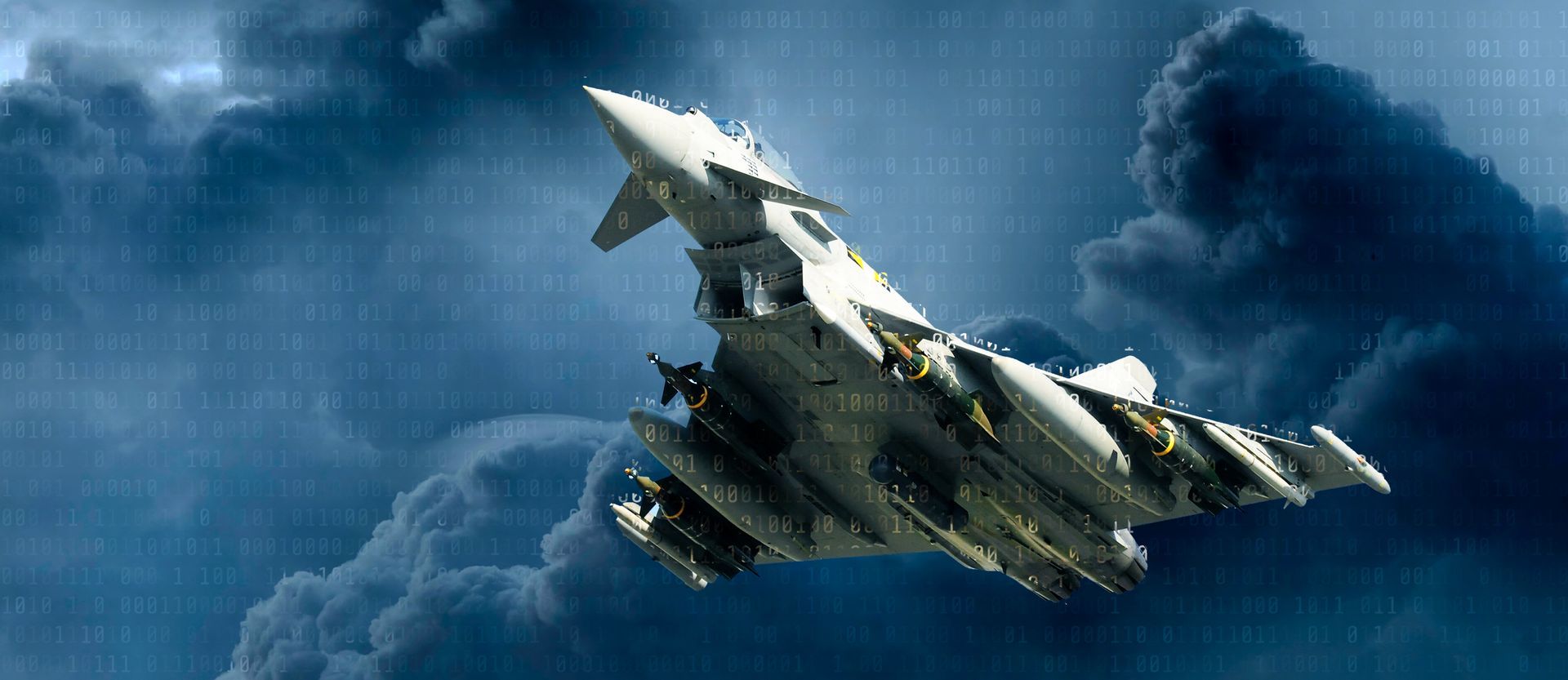
Resolve was first introduced on Typhoon and subsequently adopted more widely across other platforms. Over time, the central airworthiness team took ownership of the contract, making it available to any DE&S team that needed it.
Today, more than 30 teams use Resolve.
For teams without it, the alternative would be to recreate the same capability manually, typically through spreadsheets and disconnected records; this is a solution widely recognised as inadequate for regulated, safety-critical environments.
The need for Resolve was driven by frontline delivery teams:
- Engineers and practitioners needed a reliable way to raise, answer and track issues.
- Engineering authorities needed clear visibility and traceability.
- Senior leaders needed confidence that issues were being handled correctly and consistently
What changed: visibility, structure and control
The most immediate difference after adopting Resolve was the ability to gain a complete oversight of issues appertaining to the maintenance and safety of each air platform.
Each individual team gained a clear, shared view of:
- How many issues, queries or change artefacts were active
- Who was responsible for each item
- Where capacity constraints existed
- Which tasks were progressing and which required intervention
This visibility worked at multiple levels. Individuals could manage their own workload more effectively. Managers could see when someone needed support or reprioritisation. Leadership could understand volume, trends and pressure points across platforms.
Resolve did not simplify regulation, nor was it expected to. Instead, it signposted what information was required at each stage, ensuring regulatory processes were followed correctly without the need for manual coordination.
Crucially, it removed the need for someone to ‘manage the spreadsheet’, de-risking the process and freeing up time for higher-value work.
Better decisions made with confidence
For senior users accountable for engineering judgement, Resolve changed the quality of decision-making.
With all questions, answers and supporting material held in one place:
- Similar historical queries could be searched and referenced
- Responses became more consistent and complete
- Decisions were made with a fuller understanding of context and implications
Resolve not only improved the speed in which decisions could be made, it also improved confidence in the answers being given.
From a senior perspective, the system also provided something that had previously been difficult to quantify: management information about risk.
By analysing volumes, trends and workload over time, leaders could:
- Assess whether risk exposure was increasing or reducing
- Take a more informed, risk-based approach to prioritisation
- Understand organisational resilience rather than relying on anecdotal evidence
Assurance, traceability and accountability
Resolve strengthened assurance by evidencing activity rather than simply recording outcomes.
From an audit and compliance perspective, the system clearly shows:
- Who raised a query
- Who responded
- What changes were made
- When actions were taken
- How an issue progressed through to authorised resolution
This level of traceability reduced reliance on institutional memory and made it far easier to demonstrate due diligence when required.
A senior user said, “Risk is no longer just discussed; it is evidenced.”
Behavioural and cultural impact
Beyond process, Resolve influenced how teams engage with data.
With access to structured, historical information:
- Data could be analysed, compared and presented meaningfully
- Trends across aircraft, platforms or issue types became visible
- Decisions could be informed by evidence rather than assumption
While human judgement remains essential, Resolve encourages more consistent behaviour across teams by providing a shared framework for how issues are handled.
Value realised in day-to-day operations
Resolve is now embedded in everyday activity.
Almost all engineering and airworthiness work has some interaction with the system, enabling teams to:
- Maintain oversight of issue volume and distribution
- Avoid rework and duplication
- Prevent loss of critical changes and documentation
One example cited was the avoidance of losing hundreds of changes to a single publication; an outcome that would previously have been difficult to prevent.
Long-term confidence
Trust in Resolve comes not only from the system itself, but from how it evolves.
Users value:
- A system that mirrors policy and supports work aligned with it
- Responsiveness from the organisation behind the software
- Ongoing refinement as regulations, processes and expectations change
A senior user puts it thus: “Resolve is the answer. Now, what is the question?”
Having experienced life without it, and having had the benefit of Resolve for some years, the value is clear.
Summary
Across more than 30 DE&S aviation platforms, Resolve has become a critical part of how issues are managed, evidenced and resolved.
This is achieved by making complex, regulated processes visible, traceable and controllable.
For further information and a demonstration on Resolve please email or call us.