Former RAF Aircraft Engineer Sam Kilgour
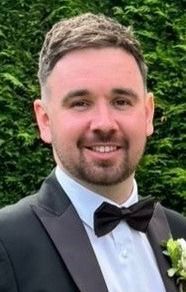
Sam Kilgour helps ensure Airworthiness software keeps pace with changing operational requirements
Sam Kilgour is one of the tlmNexus Customer Integration Engineers (CIE) and his route into the role evolved directly from his experience with the Royal Air Force. His story starts when he left school and went straight into the RAF at 17 as an avionics technician.
“I started on Chinook maintenance,” he explains, “then worked across a range of platforms including Tornado at Marham and the A400M at Brize Norton.”
Over the next 12 years, he built deep hands-on experience in aircraft engineering, eventually becoming a Corporal and the team lead back on Chinooks.
“At that point, I decided not to sign on again. I had served for 12 years and felt it was time to try something new.”
A conversation with former colleague Craig Vint opened the door. “Craig mentioned customer integration work at tlmNexus. It wasn’t something I’d ever considered, but the idea took hold.”
Sam joined as a Customer Integration Engineer in April 2024, initially not for long. He made a brief move away into the rail sector and then made a decision that says a lot about both him and the company. “I left for about five or six months to try something different and I was assured as I walked away that the door at tlmNexus would always remain open. That meant a lot to me, and when I realised that my new world was nowhere near as satisfying as my work at tlmNexus had been, I made my mind up that if I was coming back, it would be with 100% commitment to stay. When a role came up again, I got in touch straight away. I was welcomed back warmly, and I have not regretted it for a minute.”
Bridging engineering and people
For Sam, the appeal of the role is the combination of technical understanding and human interaction. “I’m a people person. I naturally build relationships. I also have a strong engineering background and I understand how things work on aircraft.”
That combination is critical in Customer Integration. “Having used Resolve myself as an engineer, I’ve seen both the pros and the frustrations. Now I get to see how different teams use it, and often what one team sees as a limitation, another uses really effectively.”
It is this ability to translate between perspectives that defines the role. “You are not just showing someone software. You are helping them understand how to use it in their world.”
What integration means in practice
In simple terms, Sam describes his job as: “Bringing the software to the customer in a way that is usable and functional for them.”
In reality, that involves a constant balance. “My role is about understanding how the customer works, how they want to work, and then guiding them on how the system can support those needs without compromising compliance or good practice.”
That might mean:
- Helping a team use an existing module more effectively
- Adapting workflows to better match operational needs
- Or feeding back ideas for new functionality
“Sometimes a customer will want to use something in a completely different way,” he says. “You have to work through that with them, and work out what is possible, what makes sense, and what has to happen for it to stay compliant.”
Relationships first, technology second
While the role requires strong technical understanding, Sam is clear where most of his time goes. “The majority is customer-facing. My working life is all about building and managing relationships properly.”
When he is on site, his focus is to: “Listen to what the customer needs, understand their pressures, and work with them to find a balanced solution.”
The technical knowledge underpins those conversations. “I’m not a software engineer, but I’ve got deep knowledge of how Resolve works and how the aviation environment operates. That combination allows me to give useful, practical advice.”
From spreadsheets to something far more powerful
One of the most visible changes comes when a new team adopts Resolve. “Before that, they’re often using spreadsheets, paper records, or a mix of different systems,” Sam explains. “Once they’re onboarded, everything becomes centralised and digital.”
The impact is immediate. “The customer teams can access everything in one place. Documents and records are all a couple of clicks away.”
Time savings are one of the biggest gains. “Sending records between engineering authorities, TAAs or desk officers becomes almost seamless. And the visibility is completely different. You can see what’s been raised, by whom, where and when.”
This visibility also drives more effective behaviour. “If we can see that one module is being heavily used and another isn’t, we can step in and help the team to get more value from the system.”
Solving real-world challenges, not theoretical ones
Every customer brings a slightly different challenge. “Even onboarding a new customer is complex,” Sam says. “You’re dealing with stakeholders you’ve never met, different ways of working, and often very specific ideas about how things should change.”
One example involved a team wanting to significantly alter how a module worked. “They wanted to use the enquiry module in a completely different way from the rest of the military. We worked through it with them, made sure it stayed compliant, and adapted it so it suited their needs.”
In another case, the focus was on efficiency. “We worked with a platform to reduce their workflow by three or four steps. It doesn’t sound huge, but it saved a lot of time in practice.”
Making change stick
Technology is nothing without adoption, Sam asserts. “A lot of the time, people move roles. New people come in with limited experience,” he explains. “So, part of the job is almost providing instant training, thus helping them get up to speed quickly.”
That ongoing support is what turns a system into something embedded. “You want it to become a natural part of how they work, not something separate or forced.”
A different kind of company culture
When asked what sets tlmNexus apart, Sam doesn’t start with the technology. “It’s the culture,” he says. “There’s no finger-pointing, no trying to take credit or push blame. If something needs doing, people come together and get it done.”
That internal culture translates directly into how the company works with customers. “There’s a real personal touch. Customers have a consistent point of contact; someone they know and trust. Over time, that becomes a very sincere working relationship.” He describes it as more than just support: “It’s a partnership. You’re working together to improve things on both sides.”
Looking ahead
As defence environments continue to digitise, the role of integration is becoming more important.
“Integration is about making sure systems don’t just exist, but are embedded, and in being so, support the people using them,” Sam says.
For him, that’s what keeps the role interesting. “Every customer is different. Every challenge is different. You’re constantly learning and adapting.”
Life outside work
Away from work, Sam is firmly rooted in Hampshire, having settled in Fair Oak after moving from Norwich as a child when his father, also in the Air Force, left the service. “I’ve been here since around 2010 and it’s home.”
Weekends are very active, as Sam outlines: “Golf in the morning, football in the afternoon,” he says. He is Arsenal supporter in case you’re wondering.
Sam also loves animals. "If I had my way, I’d have loads of animals; donkeys, cows, dogs, rabbits. I love them all.”
A fear of flying? Really?
A fact not many people might know about Sam Kilgour is that, despite having been an aircraft engineer and having travelled to 28 countries and counting, he has a fear of flying.
“I still fly,” he says. “But I put my noise-cancelling headphones on, shut my eyes and get through it.”
It’s a small insight that says quite a lot about him: practical, quietly determined, and willing to push through discomfort to get where he needs to be. It’s also a mindset that has carried him from a career in the RAF to a customer-facing role helping defence teams make better use of complex software.
For anyone considering a similar path, Sam’s journey offers a clear message: technical expertise is only part of the story.
Success in customer integration comes from something broader and involves the ability to understand people, build trust, and translate complex systems into something that genuinely works in the real world.