
Everyone's career looks joined up in retrospect
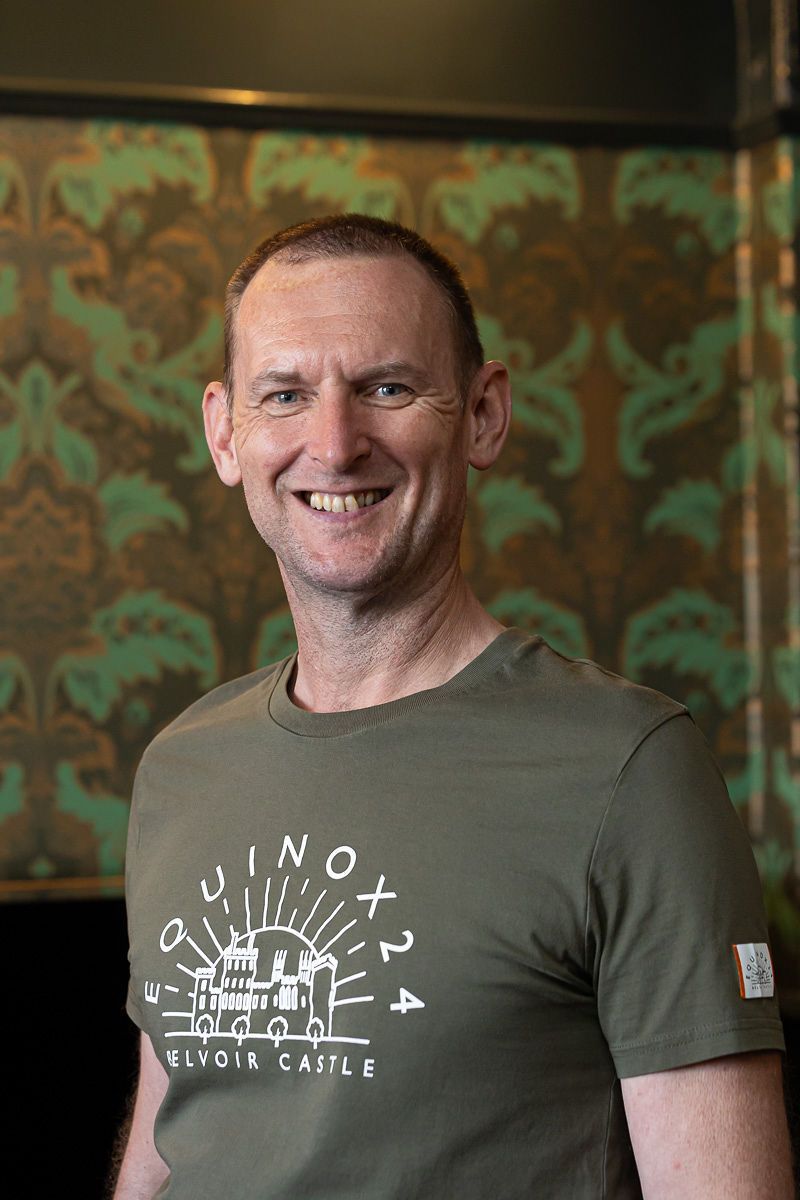
If ever there was someone who proves that careers can join together with passions, it's tlmNexus Senior Business Analyst, Lee Storer.
Having said that, the man who has, at the time of writing, recorded 35,659 aircraft didn’t start out with his current career in his sights.
Today he acts as the bridge between customers, developers and QAs to get to the heart of what really needs to be built, turning complex requirements into practical, cost-effective solutions. Getting to this point has involved A&E departments, Manchester Airport, military aviation, healthcare software, Ironman triathlons and a lifelong fascination with aircraft.
"Everyone's career looks joined up in retrospect," he says with a smile. "But mine certainly wasn't planned."
In fact, it all started when Lee spent 26 weeks, including his 21st birthday, in hospital with kidney problems. His Mum worked for a medical publisher and brought him books about his condition, and before long he found himself understanding his illness in remarkable detail. "I probably knew more about my own problems than most of the healthcare professionals looking after me," he laughs.
Rather than putting him off healthcare, his experience inspired him to join the profession. Not wanting to spend years at medical school, he chose nursing instead, specialising in acute care and trauma. "I spent a good few years sticking fingers in bleeding orifices," he says with his dry, self-deprecating humour.
Alongside healthcare though, there had always been another passion. Aircraft.
"I've loved them for as long as I can remember and watched them for hours with my Dad. I could happily stand at the end of an airfield all day watching planes."
Amazingly, those two worlds came together when Manchester Airport created one of the UK's first in-house emergency healthcare teams. "It was the perfect job. I could still stick fingers in holes and also play with planes." After several years working airside, when the airport sold its in-house company to the NHS another opportunity appeared as healthcare itself began embracing digital technology.
"The challenge back then was getting lots of different systems to talk to each other," he explains. "It wasn't a million miles away from the human body. We're made up of all these separate systems that somehow work together." The way his mind worked led him into healthcare software, product ownership and eventually the business analysis role he occupies today.
What does a business analyst do?
When asked ‘exactly what does a Senior Business Analyst do?’, Lee explains that the title means different things in different organisations.
His own description is simple. "I'm the interface between the customer and the technical developer teams."
In most walks of life, customers tend to think they know exactly what they need, but they rarely, if ever, do. In IT, developers usually just want clear instructions; they don’t want to have to delve into the whys and wherefores of what a customer wants. Somewhere in the middle sits the Business Analyst, asking questions until everyone understands the real problem.
"A customer might tell you they need a button over there," he says. "After a bit of digging you discover they don't need a button at all, let alone over there."
Around Business Analysis, there is a whole world of Institutes, qualifications, books and tools, but it is communication, Lee believes, that is far more important than any textbook methodology.
"You can have all the tools in the world, but if people don't feel comfortable talking to you, you won't get very far."
He puts much of his communication ability down to his nursing background and the super-efficient bedside manner he learned to adopt. “It’s a bit like acting,” he explains. “You can’t feel deep compassion for every patient; it would exhaust you. But you have to show compassion in order to get people quickly onside because if you can make someone relax, you get to the solution much faster."
That approach extends to his own development teams too. "I like bringing developers and testers into customer meetings. Quite often they'll say, 'No, I don't want to go - I'll say the wrong thing.' But I explain that everyone loves talking about themselves and all we need to do is ask questions and listen carefully to the answers. It's valuable for everyone when they hear directly from the customer."
What led Lee to join tlmNexus?
When tlmNexus approached him, he wasn't looking for another role and so what made him agree to talk? He smiles, "The aircraft, of course."
Conversations with tlmNexus head of development Andy Stevenson about the business, the technology and where the company was heading convinced him it was worth making the move.
His first major project was working on the Red Arrows' RIMS programme, joining before any code had been written and helping to shape it from the very beginning. "I've been involved right through its journey, and that's where I naturally like to be." He also appreciates something he felt he'd lost in much larger organisations.
"I've worked for companies employing thousands of people. There are lots of opportunities, but you can feel like just another cog."
At tlmNexus, he enjoys having direct access to colleagues and leaders alike. "Working alongside people like Andy Stevenson who heads our technical team, and VBU Leader Dave Appleton means you can genuinely influence things. You can have conversations, share ideas and know they've been heard. Now that tlmNexus is part of Omegro, it’s even more exciting because we get all the benefits of having big company systems and processes to help us grow, without losing the agility of a smaller company.”
Looking ahead, Lee believes AI will transform the way Business Analysts work, but it will not replace what matters most. "We'll still need to understand what customers actually need. That bit doesn't go away."
Away from work, life is just as busy.
Lee has completed five Ironman-distance triathlons and continues to train for long-distance events, although he says running isn't about escaping work.
"It's where I process things. We all have masses of information being thrown into our buckets every day, and I find it’s vital to process it consciously. I come up with solutions as a result"
When he's not swimming, cycling or running, you'll probably find him in his wildlife garden, photographing elephants in southern Africa or standing beside an airfield with a camera.
He's recorded every aircraft he's ever seen and the current total is more than 43,800 including duplicates, and 35,659 unique.
"I'll travel almost anywhere to photograph aircraft," he admits.
Talking to Lee, it quickly becomes clear that he's endlessly curious. Whether he's helping a customer to untangle a complex problem, encouraging developers to join a conversation, training for another endurance event or waiting patiently for the perfect photograph, he's driven by wanting to understand how things work.
Looking back, all those twists and turns in his career have really joined up after all.