
Connected for Combat: how tlmNexus works on connecting people and systems to enable the MOD to make better decisions
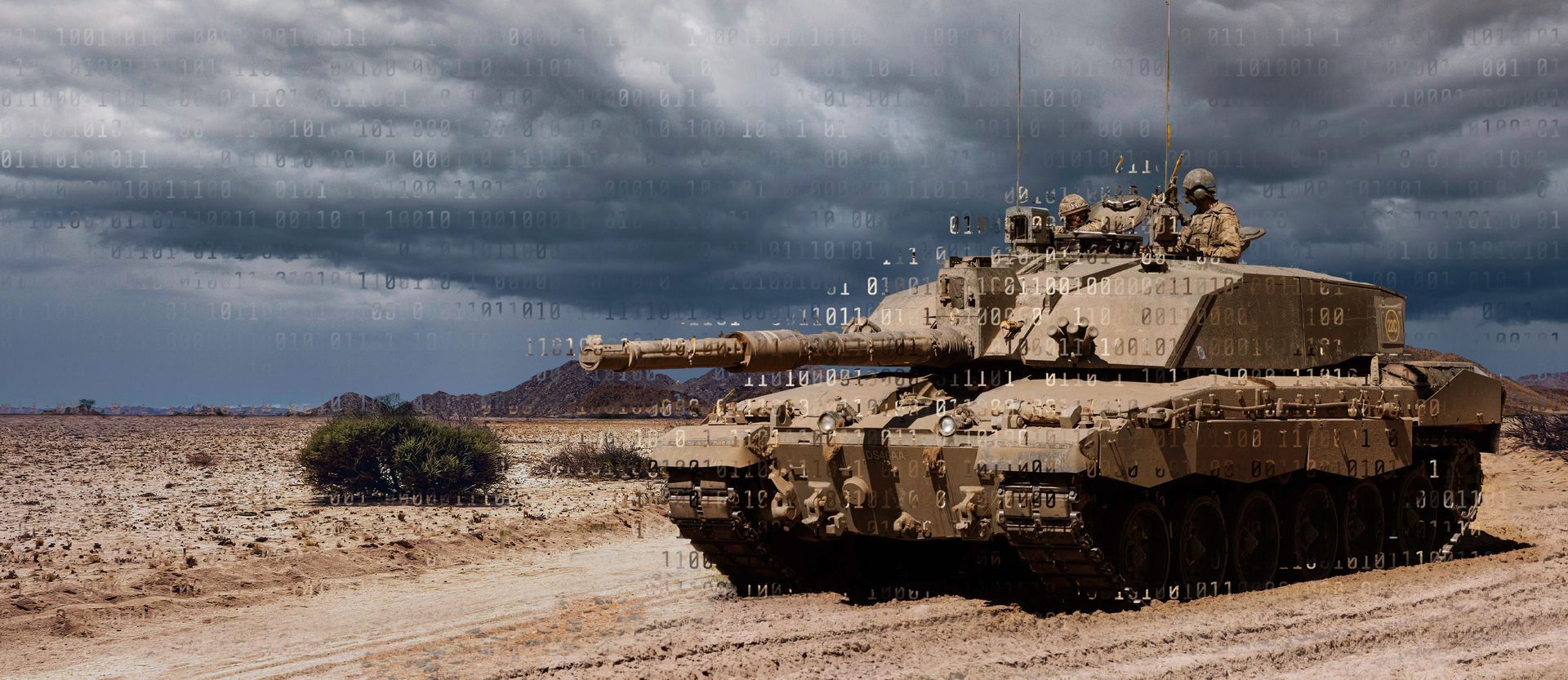
tlmNexus will be exhibiting at DVD2026 at UTAC Millbrook on 16–17 September, where this year’s theme, Connected for Combat – Aligning people, systems and decisions links really well with what we do; what we are good at. The theme raises an important question about what being connected really looks like. What does it mean in practice?
Modern Defence capability depends upon connection
Equipment must integrate with other equipment, digital systems need to exchange information. Industry, MOD, Front Line Commands and suppliers must work together. Engineering, support, commercial and operational teams all contribute different parts of the picture.
That thinking sits at the heart of DVD2026, and it sits at the heart of tlmNexus’ expertise.
Jointly sponsored by the National Armaments Director Group and Army Headquarters, the event is focused on a more integrated approach to Land capability, bringing Defence and industry together around the need to align people, systems and decisions.
At tlmNexus we have found that connection alone does not guarantee a better outcome.
Many thousands of interactions between our team and MOD teams show us that the real value comes when those connections allow people to understand the complete picture, trust the information in front of them and act on it with confidence.
Connecting systems is only part of the answer
Defence has invested extensively in specialist technology, where engineering applications perform engineering functions, asset and maintenance systems manage equipment information, document repositories hold controlled information, and business applications support commercial and programme activity. New digital technologies, sensors and data sources are being introduced all the time.
Each can perform its role extremely well, and now we have moved to a new difficulty, which arises when the information required to make a decision sits across several of them.
A technical issue may have supporting evidence in one system, with associated documentation held somewhere else; the actions taken sit in another application and important context is found in an email or in the minds of individual team members.
The systems may all be functioning, but the organisation can still struggle to see the picture in sufficient breadth in order to make a confident decision.
That is why we believe the conversation around connectivity needs to extend beyond “Can these systems communicate?”
It should also ask:
· Can the people using them find and understand the information they need?
· Can they establish where it came from and whether it is current?
· Can they see the decisions and evidence surrounding it?
· Can different organisations work from the same trusted understanding?
Ultimately the conversation should ask, ‘does being better connected enable a better decision?’
At tlmNexus we have seen that aligning people matters just as much as integrating technology
The DVD2026 theme deliberately puts people alongside systems and decisions, which we believe to be highly significant. Defence capability is delivered across organisational boundaries. We have worked with MOD teams, Front Line Commands, engineering specialists, commercial colleagues, industry partners and suppliers who all contribute to the same programme over its lifetime.
Technology can help connect those groups, but our experience shows that collaboration depends on more than giving everyone access to yet another application.
It depends on people having context. They need clear ownership and to understand what has already happened, what remains outstanding and why previous decisions were taken.
They need evidence that can be followed rather than somehow reconstructed.
Furthermore, when personnel change, as they inevitably will across long Defence programme, the organisation needs to preserve that understanding rather than repeatedly rebuild it. This is where connected information becomes as important as connected technology.
At tlmNexus, we have spent many years helping Defence teams manage complex through-life acquisition, engineering and support information.
Resolve, for example, has been developed over many years in partnership with DE&S to provide collaborative management of issues, their actions and supporting evidence, giving users a transparent and auditable view from initial identification through to resolution. It links documentation, decisions and associated issues while retaining technical and operational knowledge over time.
Our wider thinking has increasingly moved towards an ecosystem approach.
Rather than assuming organisations should replace established systems, the aim is to enable information from different environments to work together more effectively, retaining context, improving traceability and helping people exploit the knowledge they already possess.
This matters because the objective is not connectivity for its own sake; the objective is operational advantage.
When teams spend less time searching for evidence, reconciling different versions of information or recreating knowledge, they have more time to analyse, engineer and decide.
When the provenance and rationale behind information are visible, confidence improves.
When knowledge survives changes in personnel and systems, organisations become more resilient. When people across organisational boundaries can work from a trusted picture, collaboration becomes considerably easier.
Connected for Combat
DVD2026 will explore how increasingly integrated equipment, technologies and organisations can strengthen the UK's Land capability and accelerate the introduction of new capability at the speed required.
For us, one of the most interesting conversations will sit underneath all of that technology:
How do we ensure the information connecting people and systems is just as coherent as the capability we are trying to create?
We see our role is as much about aligning people, systems and decisions as it is about putting systems together.
It requires the right information to reach the right people, with its context and evidence intact, so they can act on it confidently.
That is when connection starts to create real value.
The tlmNexus team will be at DVD2026, UTAC Millbrook, on 16–17 September. If you are attending and would like to discuss connected information, through-life support, trusted evidence or how your existing Defence systems can work together more effectively, we would be delighted to talk.